
Temple Run
Imangi StudiosArcade
4.2320.76K Reviews
- Version
- 1.43.0
- Installs
- 500.00M
- Age Rating
- Everyone
Screenshots
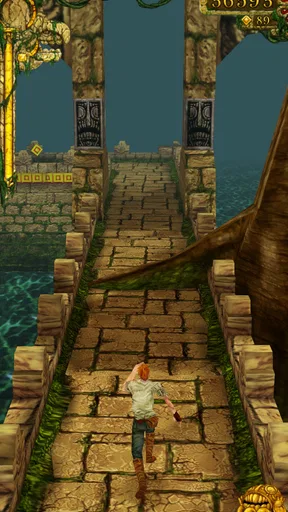
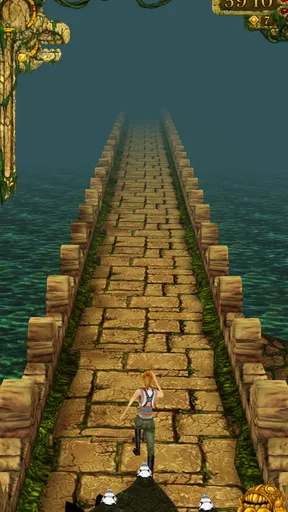
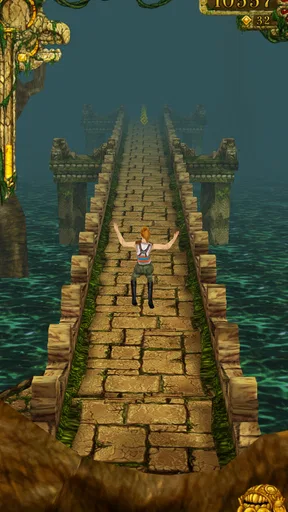
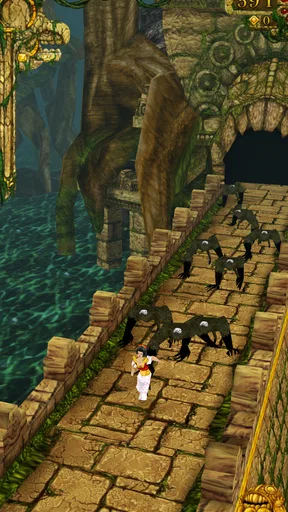
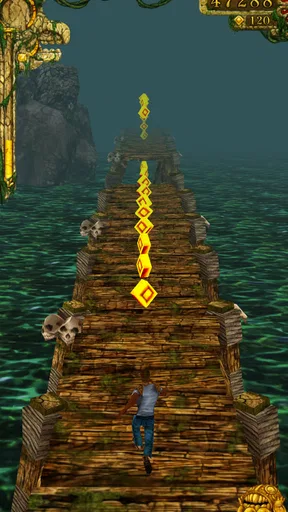
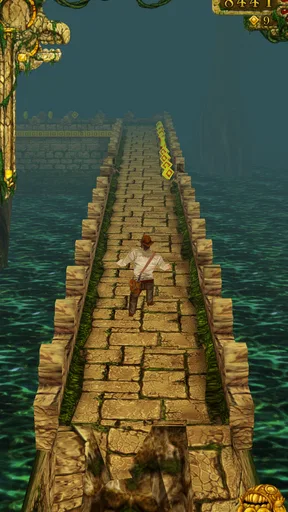
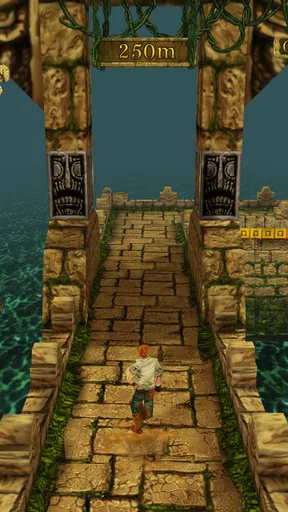

Our Review of Temple Run
 Analysis by Appyee
If you’ve ever found yourself daydreaming about being Indiana Jones or Lara Croft, then you’ve probably already heard of Temple Run. If not, buckle up because this game is a wild ride through ancient ruins and jungle landscapes, where your reflexes are your best friend.
A run that works in short bursts
I find the basic appeal easiest to understand in an ordinary spare moment: waiting for a ride, taking a short break, or settling in for a quick game before doing something else. You start moving almost immediately, and the swipe-and-tilt controls make it simple to try another run without learning a long sequence of commands. That makes this arcade game a natural fit for brief sessions, though its one-more-try pull can make a short break stretch longer than planned.
The central loop is clear: react to what is ahead, collect what you safely can, and keep the run alive. There is no need to remember a complicated story between sessions, so I can pick it up after a few days away and get back into the rhythm. The trade-off is that the appeal depends on enjoying repeated attempts. If you want a measured campaign with clear stages and a definite ending, a level-based platform game may suit you better.
Build a repeatable rhythm
For me, the most useful improvement is not trying to make every run perfect. I focus on one habit at a time: reading the path early, making a clean turn, or deciding when a coin trail is not worth the risk. That approach is more reliable than swiping frantically once the obstacles arrive. In a game built around quick reactions, a deliberate movement often beats a late correction.
A practical routine is to begin each attempt with attention on the route rather than on every coin. Once the pace feels familiar, I can add collection to the decision-making. This helps avoid a common trap: leaning toward a tempting line of coins and missing the turn or jump that matters more. Coins are useful for progression, but surviving the current stretch gives me a better chance to keep building a run.
It also helps to keep the phone steady enough for tilt controls to register as intended. I use small, controlled tilts rather than large movements, especially when I am playing while seated or holding the device one-handed. That is not a hidden trick; it is simply a way to make the control input more predictable. If your grip makes tilting awkward, prioritizing swipes and choosing a comfortable two-handed hold can reduce avoidable mistakes.
Running for Your Life!
So, what’s the deal with Temple Run? Well, imagine this: You’ve just nabbed a cursed idol from a temple, and now you’re being chased by demonic monkeys. Yeah, it’s intense. The game throws you into the action right from the get-go, and your mission? Run, slide, jump, and turn to escape these relentless pursuers. It’s all about those fast reflexes and quick decision-making skills.
As you dash through the temple, you’ll encounter a variety of obstacles. These range from roots and tree trunks to fiery pits and broken bridges. The controls are super intuitive, utilizing simple swipe gestures and tilt mechanics. It’s easy to pick up but hard to master, making it a perfect blend of accessibility and challenge.
Graphics and Sound: Setting the Mood
The graphics in Temple Run are pretty slick. The jungle setting is beautifully rendered, with a nice mix of vibrant and earthy tones. The animations are smooth, which is crucial for a game that relies so heavily on quick movements. It really captures that adventure-movie vibe, and the sound design adds to the thrill. The music ramps up the adrenaline, and the sound of your character’s footsteps pounding along the path really pulls you into the experience.
Settings that are worth a quick look
Before settling into a long session, I would check the available settings and choose what feels comfortable for the way I play. In particular, the tilt-based steering makes posture and grip matter more than they do in a game controlled entirely by taps. A relaxed hold and a steady angle make small corrections easier; an awkward position can turn a fair obstacle into an accidental swerve. I would also consider whether sound suits the moment: the atmosphere adds energy, but a quiet setting may be more practical when playing in a shared space.
The useful point is to make the setup repeatable. If I change how I hold the device every run, it is harder to tell whether a missed turn came from my timing or my movement. Keeping a comfortable grip and using the same basic posture gives me a clearer sense of what I need to improve. This is a modest adjustment, not a shortcut that removes the challenge.
Power-Ups and Upgrades
Now, let’s talk about the goodies. As you race through the temple, you’ll collect coins that can be used to purchase power-ups and upgrades. These power-ups can give you a much-needed edge, like a coin magnet or a speed boost. Trust me, when you’re neck-and-neck with those terrifying demon monkeys, a little boost can be a lifesaver!
Upgrades are also available for your character, allowing you to improve various abilities. You can increase your invisibility duration or boost the effectiveness of your power-ups. There’s also a variety of characters to unlock, each with unique advantages, adding a layer of strategy to your run.
Spend coins with a purpose
I would treat upgrades as a way to shape the kind of run I want, rather than buying things just because I can. If I am still learning to avoid hazards, an upgrade that supports a more forgiving run may matter more than a perk that helps collect extra coins. Once my movement is steadier, coin-focused choices can feel more worthwhile. The best purchase depends on what is currently limiting me: staying alive, controlling the route, or building resources for later runs.
There is a small but useful distinction between a power-up helping during a run and an upgrade improving its usefulness over time. I try not to assume that either one will rescue a careless decision. A boost can change the feel of a stretch, but it does not replace noticing the path. Similarly, unlocking another character can add variety, but I would not choose one solely for novelty if a different ability better fits my current goal.
The game is free to start, while optional in-app purchases range from $0.99 to $19.99 per item. I would first see how far the normal coin-and-upgrade loop takes me before spending. The core appeal is making better decisions during runs, so paying is not a requirement for finding out whether the controls and pace suit you. For anyone trying to keep play strictly free, it is sensible to avoid treating every tempting purchase as necessary progress.
Why it’s So Addictive
One of the reasons Temple Run is so addictive is its simplicity. It’s the kind of game you can jump into for a quick session and find yourself playing for hours. The thrill of trying to beat your previous high score is seriously compelling. Plus, the game’s random level design means that no two runs are the same, keeping things fresh and exciting.
There’s something about the combination of speed, danger, and the constant threat of those monkey monsters that keeps you coming back for more. It’s that perfect mix of challenge and fun that keeps the adrenaline pumping.
How it compares with other arcade runs
Compared with arcade games built around separate stages, this one puts more emphasis on reacting to an unfolding run and trying to improve your own result. I like that there is little setup between attempts; the same immediate format also means less variety in the basic activity than a game with distinct levels, objectives, or a changing campaign. If you enjoy chasing a personal best and refining your reactions, that repetition is the point. If you need regular changes in scenery or goals to stay interested, another arcade game with structured stages may hold your attention longer.
Its swipe and tilt combination gives it a different feel from runners that rely mainly on tapping or lane changes. The tilt input can make steering feel direct once I am used to it, but it is also less forgiving of an unstable grip. I would choose a simpler tap-controlled alternative when playing in a cramped position or when I want controls that do not depend on how I am holding the device. Here, the physical feel of the phone is part of the skill, not just a detail.
Who will enjoy it, and when to pass
I would recommend it to someone who likes quick arcade challenges, wants a game that is easy to revisit, and enjoys seeing small improvements in timing translate into longer runs. It also suits casual play because the basic controls are easy to grasp without needing to learn a large set of moves. The game is rated Everyone, which makes its straightforward, stylized chase easier to consider for a broad audience, although parents should still decide whether its action and pursuit theme fit their child.
I would be less likely to recommend it to someone who dislikes reflex-based play, gets frustrated by restarting after a mistake, or expects a story-driven adventure with meaningful chapter progression. It can also be a poor fit when you cannot comfortably tilt the device or give the screen your attention. Playing while walking, crossing a street, or doing anything that needs your eyes is a bad idea; the quick reactions that make the game work also make divided attention risky.
What to expect from the game
Imangi Studios developed this arcade game, which first arrived on March 26, 2012. It has a 4.2 average from around 5.2 million ratings and has passed 500 million installs, a reach that reflects how familiar its quick-run format has become. The current version is 1.37.0, and it requires Android 6.0 or later. Those details make it a broadly established option, but the practical question is still whether you enjoy repeating runs and learning through quick failures.
For a normal daily use case, I can imagine opening it during a short wait, playing a few attempts, and stopping when I have either improved my best or reached the point where I am reacting carelessly. A simple personal rule helps: decide before starting whether this is a quick break or a longer session. The game does not need a long warm-up, but its restart loop makes it easy to lose track of time if I keep chasing one more run.
Where mastery has its limits
Getting better does not turn every run into a controlled route. The changing path keeps reactions important, and collecting coins can compete with choosing the safest movement. That tension is part of the design, but it also means a strong player can still lose a run after a rushed decision. I would focus on consistency rather than expecting a perfect streak, and I would take a short pause when my swipes start becoming guesses.
There is also a ceiling to what upgrades can do for someone who does not enjoy the core loop. More options can give regular players goals, but they cannot transform an endless run into a story campaign or remove the need for quick attention. If the chase itself is not fun after several attempts, grinding for improvements is unlikely to change that. Knowing when to stop is as practical a skill as knowing when to turn.
Final Thoughts
In the end, Temple Run is a fantastic pick for anyone looking to kill some time and have a blast while doing it. It’s simple, engaging, and just the right amount of challenging. Whether you’re a casual gamer or a hardcore adventurer, it’s easy to see why this game has become such a hit. Give it a try next time you’re looking for a quick escape into a world of perilous temples and relentless pursuit. Just remember to watch out for those monkeys!
My recommendation is strongest for players who enjoy short, repeatable tests of attention and are happy to improve by noticing their own habits. Start with comfortable steering, keep coin collection secondary to safe decisions, and spend only if an upgrade genuinely matches the way you play. If you want rich progression, relaxed controls, or a run that does not ask for constant visual focus, a different kind of game will be a better fit. For everyone else, this remains an easy arcade game to pick up, with enough pressure in each attempt to make a familiar path feel exciting again.
Privacy and Permissions
See what permissions an app requests and how it handles your data.
- Photos/Media/Files
- read the contents of your USB storage, modify or delete the contents of your USB storage
- Storage
- read the contents of your USB storage, modify or delete the contents of your USB storage
- Wi-Fi connection information
- view Wi-Fi connections
- Other
- view network connections, full network access, control vibration, prevent device from sleeping, Google Play license check, read Google service configuration
How Temple Run Compares
Full ComparisonChoose Subway Surfers for city-hopping missions, Temple Run for a classic, all-ages chase, or Sonic Dash for the highest Google Play rating and speed-focused action.
| App | Developer | Rating | Price |
|---|---|---|---|
 Subway Surfers | SYBO Games | 4.6 | Free |
 Temple RunThis App | Imangi Studios | 4.2 | Free |
 Sonic Dash Run | SEGA | 4.7 | Free |
Verdict
Strengths of Temple Run
- Intuitive controls enhance gameplay.
- Endless levels keep it engaging.
- Regular updates add new content.
- Compatible with most devices.
- Fun for all age groups.
Limitations of Temple Run
- Repetitive scenery can get boring.
- In-app purchases can be costly.
- Ads interrupt gameplay occasionally.
- Requires stable internet connection.
- Graphics are not very advanced.
Other Releases by Imangi Studios
View All
Temple Run 2: Endless Escape
Action4.1
Similar Picks in This Category
View All
Subway Surfers
SYBO Games4.6

Stickman Party 234 MiniGames
PlayMax Game Studio4.6

Subway Princess Runner
Ivy4.4

Zombie Tsunami
Mobigame SAS4.6

Stack Ball - Crash Platforms
CASUAL AZUR GAMES4.5

Fruit Ninja®
Halfbrick Studios4.4
You May Also Like
View All

Frequently Asked Questions
What is the main objective of Temple Run?
Temple Run is an endless runner game where players must navigate their character through an ancient temple, avoiding obstacles and collecting coins. The main objective is to run as far as possible without being caught by the demonic monkeys chasing you. The game tests your reflexes and decision-making skills as you dodge obstacles and collect power-ups.
What kind of in-app purchases are available in Temple Run?
Temple Run offers a variety of in-app purchases that enhance gameplay. Players can buy coin packs to unlock new characters, power-ups, and abilities. There are also special items that can be purchased to improve your chances of surviving longer and achieving higher scores. While the game is free to play, these purchases can provide an advantage.
Is Temple Run suitable for children?
Temple Run is generally suitable for children, as it features simple controls and an engaging, non-violent concept. However, parents should be aware of the in-app purchases and ensure that children understand not to make purchases without permission. The game can also be a great way to improve hand-eye coordination and quick thinking in younger players.
Does Temple Run require an internet connection?
Temple Run does not require an internet connection to play, making it a great choice for offline gaming. However, an internet connection might be necessary for downloading updates or accessing certain features like leaderboards. This makes it convenient for on-the-go play, especially in areas with limited connectivity.
How do I earn high scores in Temple Run?
Earning high scores in Temple Run involves mastering the controls and understanding the game’s mechanics. Collecting coins can increase your score multiplier, and using power-ups strategically can help extend your run. Practice is key, as knowing when to jump, slide, or turn can significantly impact your overall score. Consistent gameplay will help improve your skills over time.
Play our best games!


